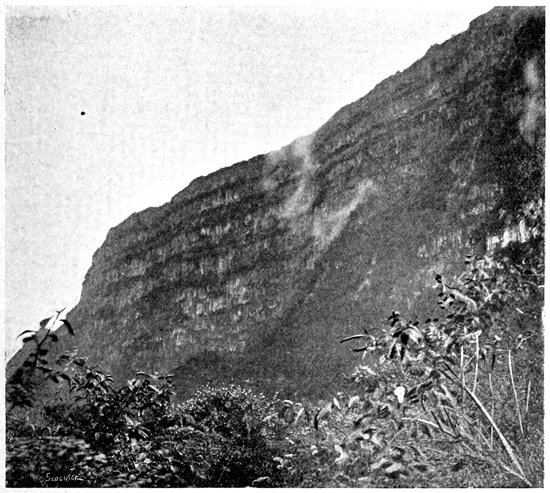
Drying Prayerbooks Mountain.—Boys' Paradise.—Lolo Women.—Salt-carriers.—Great Rains.—Brick-tea Carriers.—Suspension Bridge.—Granite Mountains.—Tibetan Bridge.—Lamas.—Tibetan Women.—Caravanserai at Tachienlu.—Beautiful Young Men.—
Lamaserai.
—Prayers?—Fierce Dogs.—Dress.—Trying for a Boat
Drying Prayerbooks Mountain.—Boys' Paradise.—Lolo Women.—Salt-carriers.—Great Rains.—Brick-tea Carriers.—Suspension Bridge.—Granite Mountains.—Tibetan Bridge.—Lamas.—Tibetan Women.—Caravanserai at Tachienlu.—Beautiful Young Men.—Lamaserai.—Prayers?—Fierce Dogs.—Dress.—Trying for a Boat.
乾經山——男孩的天堂——彝族婦女——鹽運工——大雨——磚茶運工——吊橋——花崗岩山脈——藏橋——喇嘛——藏族婦女——在打箭爐的驛站——美麗的年輕人——喇嘛寺——祈禱?——凶猛的狗——穿著——試圖找船
There are many summer trips that are a joy in the remembering, but a trip to Chinese Tibet had never fallen to the lot of any European woman before. And it was the more delightful, perhaps, because we never thought of anything of the kind when we started. But there is a drawback to living on a mountain-summit that it is such a climb to come back again when you go out; and our quarters on Mount Omi were not too comfortable! Only one small room for living and sleeping in, like a back room in a Canadian log-hut, and without a window to open, makes one restless after a time. So we thought we would gently stroll on to another sacred mountain, whose flat top was a very striking feature in the landscape. And we went 397down into what is called the Wilderness, where there are wild cattle and wild men, and for about a week wandered on, passing along by the boundary of the unconquered Lolos, and up the most magnificent ravine I have seen or can imagine, down which a torrent had swept but a week before from the Sai King, or Drying Prayerbooks Mountain, to which we were bound, drowning twenty-six people in one hamlet alone.
有許多夏日旅行在回憶中都是愉快的,但對於任何歐洲女性來說,前往中國的西藏旅行都是前所未有的。這次旅行或許更令人愉悅,因為我們開始時從未想過這樣的旅行。但居住在山頂有一個缺點,那就是每次外出後回來都需要攀爬;而我們在峨眉山上的住所並不太舒適!只有一個小房間,用於生活和睡眠,就像加拿大木屋裡的後房,沒有可以打開的窗戶,時間久了讓人感到不安。於是我們想要慢慢地前往另一座聖山,它的平頂在景觀中非常引人注目。我們走下山,進入所謂的荒野,那裡有野牛和野人,我們在那裡漫步了大約一週,經過未被征服的彝族邊界,穿過我所見過或能想像的最壯麗的峽谷,一週前,一場洪水從乾經山(我們的目的地)沖下來,僅在一個村莊就淹死了26人。
SACRED SAI KING MOUNTAIN. By Mrs. Archibald Little.
Climbing the Sai King was rather a formidable affair. But for the guidance of a young priest, returning from 398 one of those begging excursions by means of which he had bought the whole mountain-summit, we never should have reached the top before darkness set in; and in the dark no man would dare to move upon the Sai King. For not only are there all manner of wild beasts, but the path leads along the narrow edge of a col, and then up staircases, till at last you arrive at three ladders, one of twenty-seven rungs, before you find yourself at the top of the awful precipices that girdle it all round, in a sort of park with firs and rhododendrons, the latter at least twenty feet high, moss hanging from them in garlands, as well as a foot deep upon the ground. It is a veritable boys' paradise (and as such I have described it at length in the Nineteenth Century of January, 1896), with squirrels and deer and birds innumerable, large very sweet white strawberries in the greatest profusion, raspberries abundant, currants plentiful, mushrooms in bushels. There are glorious views from the brink of precipices, when you can break your way through the rhododendrons and look over, hearing the rivers murmuring some five or six thousand feet below, and seeing the Tibetan summits like a sea of mountains.
But I have mentioned nearly all there was to eat on the Sai King Shan, and our room was almost more cracks than room, so that we shivered inside it even when almost blinded by wood smoke. And when the wind howled and the rain poured in like a waterspout, it did occur to us to wonder what we should do if one of the ladders were carried away. Besides, by dint 399of thinking about it, the going down those ladders became increasingly terrible. I had paused in the middle of coming up, and, looking between my feet, had seen the mists moving and the cataract falling four thousand feet sheer below me, and through a rift in the clouds had caught a sight of the great precipice to the north, greater even than that on Omi. We found ourselves wondering whether it would be wise to look down and gaze on everything, if clear, when descending. When we had got as far as that, it seemed more prudent to go down at once. And it was then we saw from the bottom the great north precipice, that is the most glorious east end of a world's cathedral. Looked at from where one will, one could not but feel in comparison how poor was a temple made with hands. Yet there in the valley six thousand feet below was the chapel and priests' house, built by their own hands with their own money by the people of the wholly Christian village of Tatientze. And here, close to the summit of the mountain, where a cord used to hang over the precipice to get down by, was the cave where two Buddhist sisters, till last year, lived seven years "to purify their souls." There was a little platform in front of the cave where they could stand and look out upon the glories of the Creator's handiwork, if so minded. Did they stand there, those two sisters? Did they worship there? Did they in the end purify their souls? Or did they find it was a mistake, thus retiring from their kind? Their father used to send them rice, which was let down to them 400by the cord, and a stream poured over the precipice in a sort of waterfall hard by. And they only went away the year before because the tidings had come of their mother's death.
Again we wandered on, or rather walked hard, for one day across the mountains, till we came to a village full of conquered Lolos, women fearless and frank as American girls, riding and walking with a grace I have never seen equalled; their men with elaborate ceremonial of politeness, but, alas! too much given to the delights of drink. We would gladly have learned more about them. But now we heard six days more would bring us to Tachienlu, in Chinese Tibet, and all our following were wild to get there, and to get fur coats, the Chinaman's ambition. As for ourselves, we wondered if it were worth while to go on, but we were certainly in no hurry as yet to get back to Chungking. Our last news from there was that it was 100° in the shade, and cholera worse than ever. Thirty thousand people, we learnt afterwards, died of it in the course of the summer, and it was worse still at Chengtu, the capital of the province, by which we had purposed returning.
攀登賽京山是一件相當艱鉅的事情。如果不是一位從乞討旅行中回來的年輕僧人引路,我們絕對不可能在天黑前到達山頂;而在黑暗中,沒有人敢在賽京山上行動。因為那裡不僅有各種野獸,而且小徑沿著狹窄的山脊,然後是上樓梯,直到你到達最後三個梯子中的一個,共有二十七級,你才會發現自己站在環繞整座山的可怕懸崖頂上,進入一個像是公園的地方,裡面有冷杉和杜鵑花,後者至少有二十英尺高,苔蘚如花環般掛在上面,地上也覆蓋著一英尺深的苔蘚。這是真正的男孩天堂(正如我在1896年1月的《十九世紀》中詳細描述的那樣),裡面有無數的松鼠、鹿和鳥類,還有大量的甜美大白草莓、豐富的覆盆子、充足的醋栗和成堆的蘑菇。當你突破杜鵑花叢,俯瞰懸崖邊時,可以欣賞到壯麗的景色,聽到五六千英尺下的河流低語,看到像山海般的西藏群山。
然而,我已經提到過賽京山上的食物幾乎只有這些,我們的房間幾乎比裂縫還多,使得我們在裡面即使被木煙幾乎熏得睜不開眼睛,還是會感到寒冷。當風怒吼,雨如水龍頭般傾盆而下時,我們不禁想,如果其中一個梯子被沖走了,我們該怎麼辦。此外,經過一番考慮,走下那些梯子變得越來越可怕。我在上來的時候中途停下來,從腳下望去,看到了四千英尺下移動的霧氣和瀑布,透過雲層的裂縫看到北面的巨大懸崖,比峨眉山上的還要大。我們不禁想,當下山時,如果天氣晴朗,我們是否應該往下看,觀看一切。當我們想到這一點時,覺得立即下山更為謹慎。正是在那時,我們從山腳下看到那宏偉的北面懸崖,那是世界大教堂的最壯麗東端。從任何角度看,都會讓人感覺到與之相比,人手建造的廟宇是多麼的微不足道。然而,在六千英尺下的山谷中,有一座由完全基督徒的塔前村村民親手建造的教堂和僧舍。而在山頂附近,一根繩子曾經懸掛在懸崖上,通往一個洞穴,直到去年,兩位佛教修女在那裡住了七年「淨化她們的靈魂」。洞穴前有一個小平台,她們可以站在那裡欣賞造物主的手工,如果她們願意的話。那兩位修女會站在那裡嗎?她們會在那裡崇拜嗎?最終,她們淨化了自己的靈魂嗎?還是發現這樣遠離人群是一個錯誤?她們的父親曾經用繩子把米飯送給她們,旁邊還有一條小溪以瀑布的形式傾瀉而下。她們只是在前年收到母親去世的消息後才離開。
我們再次繼續前行,或者說辛苦跋涉了一天,穿越山脈,直到來到一個充滿已被征服的彝族人的村莊。那裡的女人勇敢而坦率,像美國女孩一樣,她們騎馬行走,姿態優雅,我從未見過如此優美的姿態。男人們儀態繁複,但遺憾的是,他們過於沉迷於飲酒的樂趣。我們很樂意了解更多關於他們的情況。但現在我們聽說再走六天就能到達中國西藏的打箭爐,我們所有的隨行人員都渴望到達那裡,並購買皮大衣,這是中國人的夢想。至於我們自己,我們想知道是否值得繼續前行,但我們肯定還不急著回到重慶。我們從那裡收到的最新消息是氣溫在陰涼處達到100華氏度,霍亂比以往更嚴重。據我們後來了解,那年夏天有三萬人死於霍亂,而省會成都的情況更糟,我們原本計劃從那裡返回。
Not at all particularly anxious for fur coats, not at all distinctly remembering what we had read of Tachienlu, we decided to go on if we could get ponies, and thus decide for ourselves if it were worth while. But now came the difficulty. With ponies grazing all round, we never could succeed in hiring one. Certainly they were very small, and we very big by comparison. Every one told us we must get ponies at Fulin. So 401to Fulin we pushed on. But this was thirty-six miles, over any number of passes, one seven thousand feet high, so we were obliged to stop a little short of it that night. Next day, however, we got there for breakfast. We had formed high expectations with regard to Fulin. For six days we had seen men staggering along under crushing weights of salt, two hundred pounds to each man, too much exhausted by their burdens even to look up. And they had all been bound for Fulin. People may not want to be missionaries in China, but I do not think any European could travel there and not wish to undo the heavy burdens, and I have seen no beasts of burthen whose sufferings have so moved my heart to pity as these salt-carriers. Salt is such a hard, uncompromising load, and it was so pitiful to notice how they had to protect it from being melted by the sweat that streamed down their poor backs. Then the passes were so high, and the paths so narrow and so wild, and the heat so great. It seemed as if any human heart must break, if it contemplated beforehand all it would have to undergo to carry one load of salt from Kiating to Fulin. Then, however often we calculated it, what they were paid, how many days they spent upon the journey, how many days going empty-handed back, we never could make out that the poor carriers were any the better off at the end of all their exertions. Of course they must be, or they would not make them; but it must be by a miserable pittance indeed. It appeared now, too, that Fulin, though well-to-do enough, was but the 402distributing centre for two very rich prosperous valleys and the country beyond, and there were no ponies to be had there. Later on in the day, however, when we really did succeed in hiring capital ponies, we no longer wondered that it had been difficult to get any for such a journey as we were undertaking. For what road there had ever been had been carried away in several places, and so had the bridges. The mountains looked exactly as if, according to the Chinese saying, a dragon had really turned round at the top, and clawed and scored and gashed the mountain-sides. All the people were going to market, as they always are in Szechuan, and in one place was a crowd busy remaking a bridge in order to get over, whilst farther on three of the strongest men of the company had stripped, and, holding hands, were cautiously trying fording. Then the others followed their example, and for a moment or two were carried off their legs by the furious stream. The hills were terrible, and, clambering up one, a mule in our company failed to establish its footing, and, turning over and over, reached the bottom dead. Just the moment before I had been wondering whether my tiny pony could make the final effort necessary to attain the top of that hill.