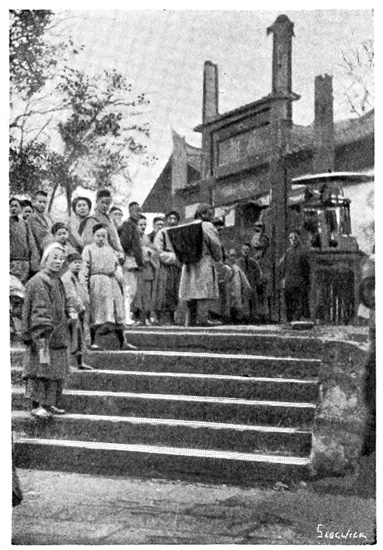
Crowd.—Nuns.—Final Shaving.—Woven Paces.—Burning Heads.—Relationships.—A Living Picture
Crowd.—Nuns.—Final Shaving.—Woven Paces.—Burning Heads.—Relationships.—A Living Picture.
人群 —— 尼姑 —— 最後的剃度 —— 織步 —— 點燃頭頂 —— 關係 —— 活生生的畫面
I have attended an ordination in St. John Lateran's at Rome, of which my principal recollection is how the Italian young men wriggled as they all lay flat upon the marble floor whilst something was sung over them. Was it a Te Deum? It certainly was very long. The whole service, indeed, seemed very long drawn out. I have also a remembrance of nearly fainting from weariness at an ordination in Exeter Cathedral; and can still recall the thrill of awestruck admiration with which I regarded the reader of the gospel on that occasion, who, as I understood, had passed first, and who yet was overcome by emotion, so far was he from esteeming himself worthy of this honour, in thinking of the work that lay before him. Certainly, long though the proceedings were—and they must have been very long if they seemed so to me, for in those days I was an enthusiast about cathedral services—yet never for a second did reverence of the highest quality cease to brood over all the scene. Thus, when invited by the abbot 351himself to assist at an ordination in one of the strictest of Chinese monasteries, there was some element of wonder mixed with the fortitude with which I prepared for a barbarous burning rite, and soupe maigre to see it on. Nor was that flask of whisky forgotten that is such a support to the traveller, remaining always full under all emergencies because never wanted. It was not in this case. But as the only European, whose account of such a ceremony I had heard, reported two or three monks carried away fainting, and a general odour of burning flesh, I thought it might be.
我曾參加過在羅馬的聖若望拉特朗大殿舉行的授戒儀式,我主要的記憶是那些意大利年輕人躺在大理石地板上,扭動著身體,似乎有人在他們頭上唱什麼。那是感恩讚嗎?儘管那段唱誦非常長。整個儀式實在顯得漫長。我還記得在埃克塞特大教堂的一次授戒儀式上,幾乎因為疲憊而暈倒的情景;至今仍能回憶起當時我對那位讀福音書的人充滿敬畏的驚嘆,他是第一個通過的,卻因情緒激動而無法自抑,這表明他完全不認為自己配得上這份榮譽,思考著他面前的工作。確實,儘管過程很長——如果在那個時候我覺得時間長,那它一定是非常長的,因為那時我對大教堂的服務充滿熱情——然而,最高質量的敬意從未有片刻消退。因此,當住持親自邀請我參加一個中國最嚴格的寺院之一的授戒儀式時,我準備見證一場野蠻的燃燒儀式,以及清淡湯,心中充滿了奇妙的期待和勇氣。我也沒有忘記那瓶威士忌,這是旅行者的支柱,總是在緊急情況下保持滿滿,因為從未需要過。但這次不同。作為唯一一個我聽說過描述這樣儀式的歐洲人,報告中提到兩三個僧人昏倒被抬走,以及燒焦肉體的氣味,我認為這次可能需要它。
AT FENGTU, CHINESE HADES. By Mrs. Archibald Little.
The large beautifully situated monastery was already full when I arrived; and my husband, who had transmitted the abbot's invitation, and himself had been there two days, informed me his was the only bed with one man in it. "They sleep head and feet," he said, as if this added to the comfort of it. "I can't think where they will put you. They are very, very full; and they are playing cards or smoking opium all the time in my room. But they are very polite,—some one is 352always 'keeping me company.' I cannot read a word." Indeed, he wore the dazed air of being too much kept company with. At the head of a flight of steps, at the entrance to the women's quarter, a dark den with two beds was, however, found for me; and though several ladies most obligingly offered to occupy the other bed, and "keep me company" all night, I retained undisturbed possession of the two, whenever the door was barred. When it was not, people "kept me company" (pei); ladies, priests, young men friends, and young men who were not friends, but might become such, all crowded in together with some young monks, whose behaviour somewhat surprised me.
Attending meals of an abundant, yet meagre, description with the other ladies, and returning the ladies' calls, I was again and again surprised by the easy behaviour of these young monks, who were apparently especially taken by my gloves, and would feel my hand gloved and feel my hand ungloved, and generally hang around. One seemed very well brought up, and began every sentence with "Omito!" generally finishing it in that way too, and accompanying every remark by a set little bow. We thought perhaps he was a lad—a child—and my husband positively screamed when, on being asked his age, he answered twenty-six. "Did you ever see a young man of twenty-six with such an innocent countenance?" he asked. "Well, I don't know," I said evasively, "I suppose it is all right; but I may as well tell you that never in all my life have I had my hand squeezed as since I came into this 353monastery. They all do it, every one of them; so I suppose it means nothing." I hastened to add, "But they are in all the ladies' rooms too." "What! in the Chinese ladies' too?" "Yes!" I persisted. "Oh, well, well!" We resigned ourselves to the ways of the country. It was not till two days later the truth dawned upon us that this innocent-faced young man, and some others, who were older and could hardly be described in that way, were nuns, guests like ourselves, and that there were besides sixteen young women going to be made nuns, together with the fifty-two young men who were going to be made priests. We were so glad we found out.
All the day through there were invitations to tea and sugar-plums with the abbot and past abbots (each only rules for three years, and then retires into a picturesque suite of rooms and garden to himself), and all the while again and again sounds of gongs and drums and chanting, and peeps at strange novices, young people with shaven heads, clad in "Liberty-tinted" gowns—dull red, ruddy brown, old gold, cream—kneeling, or prostrating themselves quite flat, or winding in and out with pacings and slow and quick movements. On the morning of the day, after many services in the night and dawning, there was the final shaving. Then each knelt in turn, and had his head felt all over the front, and with great care, by a seated priest with immovable countenance of the Indian type, and long taper, talonlike fingers. If a hair could be felt, back to the barber! If quite smooth, little circles were traced 354with Indian ink upon the polled pate—this was done by the eye, and often one had to be effaced and retraced; then a tiny packet was handed to the kneeling one. It was some time after this ceremony the abbot, in dull cream, with over-gown of rich red satin, like the others, all made of tiny bits sewn together to simulate rags and poverty, and passed under the right arm, but clasped over the left breast, black-hooded, and bearing in lifted hand before his face a golden jui, or sceptre, entered the large principal temple, and sat on a chair placed upon the altar, a scourge borne behind him, draped with red silk, being placed to his left, and what looked like a censer to his right. Then four priests, with many kneelings and flat prostrations, stood before the altar, seven of the novices following in like fashion, and joining the long line, seven at either end. Each carried a long piece of cloth to spread upon the floor on which to lie prostrate; and as the two lines stood facing each other before the altar, the two in the centre raised the kneeling-cloth to their eyes, and with it solemnly tso-i'd to each other; then each, turning quickly to the right, went through the same ceremony with the man he now found himself confronted with; and so all along the line, only the reverence growing less and less, till the last man hardly got the cloth up as high as his shoulders, for they had to be very quick. The wooden gong was being beaten faster and faster. And now the priests led off; and each set of nine, keeping to its own side of the temple, went through the quickest "woven paces" I have yet seen, curving in and round upon 355one another, and round the huge stone monoliths that support the vast graceful temple roof, whose erection still remains a mystery, so lofty is it and so large its span, so ample its unsupported roof-curves. It was like the quickest possible follow-my-leader, so that the end of the tail came up always smiling all over, and breathlessly trying to get through the figure. Meanwhile, at the side, towards the back, another dignitary sat in state, and two novices knelt, and went flat, and came forward, and practised taking incense-sticks from the altar with fingers widely spread after a fashion that does not look easy and does look mystic. But what was the meaning of it, or the dance, no one seemed able to say.
這座位置優美的大寺廟在我到達時已經擠滿了人。我丈夫,他是住持邀請的傳達者,自己也已經在那裡住了兩天,他告訴我,他是唯一一個與別人同床的。「他們頭對腳地睡」,他說,彷彿這樣就更舒適一些。「我真不知道他們會把你安排在哪。他們真的,真的很滿;而且他們一直在我房間裡打牌或吸鴉片。但他們非常有禮貌——總有人陪我(pei)聊。」確實,他顯得有些迷茫,好像被過度陪伴了似的。在通往婦女區入口的台階頂端,找到了一間昏暗的房間,裡面有兩張床;雖然有幾位女士非常好心地提出要睡另一張床,並「整夜陪伴」我,但只要門閂上,我就可以不受打擾地擁有這兩張床。門沒有閂上時,總有人來「陪我」,女士、僧侶、朋友和不是朋友但可能會成為朋友的年輕男子們,還有一些行為有些令人驚訝的小僧人,全都擠在一起。
與其他女士一起參加豐盛卻清淡的餐食,並拜訪女士們時,我一次次地驚訝於這些年輕僧人的隨便行為,他們似乎特別喜歡我的手套,會摸我的戴手套的手和不戴手套的手,並經常圍在我身邊。一個看起來教養很好,每句話都以「阿彌陀佛」開頭,通常也以此結尾,並伴隨著小小的鞠躬。我們以為他是一個孩子——一個小孩,我丈夫在被問及年齡時,當他回答二十六歲時,我丈夫大叫起來:「你見過一個二十六歲的年輕人有這麼無辜的面孔嗎?」我含糊其辭地回答:「嗯,我不知道,我想這沒什麼不對;但我得告訴你,自從我來到這個寺廟以來,我從未像這樣被人握過手。他們都這樣做,每一個人;所以我想這沒什麼特別的意思。」我急忙補充道,「但他們也在所有女士的房間裡。」 「什麼!在中國女士的房間裡也這樣?」 「是的!」我堅持說。「哦,好吧,好吧!」我們只好接受這個國家的風俗。直到兩天後,我們才意識到這個有著無辜面孔的年輕人和其他一些看起來年紀更大、不能被如此形容的人,其實是像我們一樣的女客人,並且還有十六位年輕女子將被剃度為尼,還有五十二位年輕男子將被剃度為僧。我們很高興發現了這一點。
整天都有邀請我們與住持和前任住持(每任住持只任職三年,然後退居到自己的一套風景優美的房間和花園)的茶會和甜點,同時不斷響起鑼鼓聲和誦經聲,我們也時不時地瞥見那些奇特的見習者,剃光的頭,身穿「自由色調」的長袍——暗紅色、紅棕色、舊金色、奶油色——跪著,或平躺著,或在台階間穿梭,動作有時緩慢有時迅速。在儀式的那天早上,經過許多夜間和黎明的儀式後,進行了最後的剃度。然後每個人依次跪下,由一位面無表情的印度型僧侶用細長的手指仔細檢查頭前部。如果感覺到一根頭髮,便回到理髮師那裡!如果完全光滑,便用印度墨水在剃光的頭上畫上小圓圈——這是用眼睛畫的,經常需要擦掉重畫;然後一個小包裹遞給跪著的人。這個儀式結束後,住持穿著暗奶油色長袍,外面披著由小塊縫合而成的富貴紅緞長袍,模仿破布和貧窮的形象,右臂下垂,左胸上扣著,頭戴黑色兜帽,手持金如意,進入大殿,坐在祭壇上的椅子上,身後一根披著紅絲綢的鞭子放在他的左側,右側放著一個看似香爐的東西。然後四位僧侶,經過多次跪拜和平躺,站在祭壇前,七位見習者也以同樣的方式加入行列,每邊七位。每個人都帶著一塊長布,鋪在地上以便匍匐;當兩條線在祭壇前面對面站立時,中心的兩個人將跪布舉到眼前,並互相敬禮;然後每個人迅速向右轉,與面對的人進行同樣的儀式;如此沿著整條線,敬禮越來越少,直到最後一個人幾乎沒能把布舉到肩膀那麼高,因為他們必須非常快。木鑼被打得越來越快。現在僧侶們帶頭;每九人一組,保持在寺廟的一側,進行我見過的最快的「織步」,繞著巨大石柱互相纏繞,這些石柱支撐著寬廣優美的寺廟屋頂,其建造仍然是個謎,因為它那麼高大,跨度那麼大,其屋頂曲線沒有支撐卻如此豐滿。這就像最快的「跟隨領袖」,讓尾巴總是微笑著趕上,全力通過隊形。同時,在側面後方,另一位尊者端坐,兩位見習者跪下,平躺,向前走,練習用大張的手指從祭壇上拿取香火,這看起來不容易卻很神秘。但這意味著什麼,或者這種舞蹈,似乎沒有人能說清。
No number of inquiries, not even a direct letter and special messenger to the monastery, had been able to elicit even the day of the great ceremony, much less the hour; but, since the evening before, we had heard of two o'clock, and at two o'clock precisely in they came. We ladies were crowding on to the few seats in one corner; the male guests, silken-clad, fur-lined, were swelling it about at the sides of the temple, the centre of which appeared already quite filled up by the priests of the monastery, and other priests and men guests, who were all greeting one another, going about, standing in groups, and generally wearing a pleased, excited appearance. Meanwhile, the populace, in serried mass, were looking in through all the many half-doors on all sides, the tops of all the doors being thrown wide open. There was music. Was 356it the wooden gong or the drum? It was quick, near. It seemed to throb with the intense excitement pervading the building. And in twenty minutes all was over. Every one had come in, the abbot clad as before, all the novices in over-gowns clasped over the left shoulder—both over- and under-gowns of what we call art colours. All had spread out their cloths and knelt and prostrated themselves, before a priest took up his position standing behind each, and extended both hands to hold the novice's head quite steady, fingers wide dispread, so as especially to shield the eyes, all of course closed. Some adhesive mixture was applied to the Indian ink circles; then a priest, standing in front of each novice, took out of the packet previously given him nice little cones of charred sandalwood and saltpetre, and stuck them on the places indicated; and some one else set them alight; and there were sixty-eight young men and women, all kneeling, with their eyes closed, their faces turned up to heaven, and with nine little charcoal cones smouldering on each of their bare pates, whilst they prayed one and all, as it seemed, with all their hearts. For if the heart is pure, you do not suffer, is the saying. My husband says he kept his eyes fixed on the three nearest him, and never saw them wince, or blanch, or utter a sound, or move a muscle. But my place was by the nuns, and one moved, so that one of the smouldering cones fell off and into her bosom, and had to be replaced; and another did not cry out, but roared—roared like a child. Yet such was the din made by the excitingly discordant music, that when I 357stepped but two off I could not hear a sound from her; so there may have been many others crying out also. I saw one nun press a cloth again and again to her eyes, and take it away apparently soaked by her tears; but her face was steady and upturned, and her expression was that of very earnest prayer. Meanwhile, the cones smouldered down till they just charred those marks with which we are familiar on priests' heads; then they went out, though all that day and on into the next several little unburnt lumps were still adhering to the poor consecrated heads.
We went away to tea and sugar-plums, leaving the new-made monks and nuns still praying; and when we came out, they had only adjourned to another temple to pray. At ten o'clock at night they were calling on Sergiafu (Buddha, Sakyamuni, what you will), thirty-four standing up quite straight, chanting, whilst the other thirty-four were lying prostrate, then going down in their turn whilst the others rose up and chanted. This they did at the rate of three prostrations and uprisings a minute. They are supposed to make ten thousand in the twenty days. It seemed to make me drowsy; so, having twice fallen off asleep whilst they prayed and rose and fell, I went to bed, leaving them still at it, to be thrice awakened by the gong calling to fresh prayers, and, when I arose the following morning, to find the whole set processioning from one dead abbot's grave to the other, praying at each. One of our Chinese gentleman friends we left in the temple at night. At eleven o'clock he was turning in. Then some one 358proposed ten more rounds of cards, and they played till daybreak. It was only the week before we had been invited to the funeral feast of his grandmother, when, with the coffin in the guest-room, a light underneath it, the ladies of the family played cards all night in a bedroom opening out of the guest-room, though their eyes were dilated either from tears or want of sleep, their heads bound with white mourning-cloths of the same coarse texture as those worn by the peasant. Was it not something like this at one time in our own country at a funeral feast?